
Beekeeping in the UK comes with its own set of climate-related challenges, especially in the North West UK, where conditions tend to be wetter, windier, and slightly cooler than other regions. These environmental factors directly affect bee activity, forage availability, and overall colony health throughout the year.
Seasonal planning is vital for beekeepers in this region. With shorter summers and long, damp winters, knowing what to expect and when to act can make the difference between a thriving hive and one that struggles. Proper timing around inspections, feeding, pest control and harvests helps avoid unnecessary stress on colonies.
This article provides clear, practical guidance for each season, specifically tailored to beekeeping North West UK. The focus is on proactive beekeeping—staying ahead of seasonal shifts to reduce losses, improve honey yields, and maintain strong, healthy colonies year-round.
Understanding the North West Climate for Beekeeping
The North West of England typically experiences higher-than-average rainfall, moderate temperatures and increased humidity compared with other parts of the UK. Winters are damp and often prolonged, while summers can be short with unpredictable warm spells. Spring tends to arrive later, and autumn often brings early declines in temperatures and forage.
These conditions influence both bee behaviour and hive management. Damp and cool weather can delay spring build-up, reduce foraging hours and limit the availability of early nectar sources. Prolonged moisture increases the risk of fungal diseases like chalkbrood, and high humidity can affect the curing of honey, leading to fermentation if not properly managed.
A common challenge is early spring. Even when colonies survive winter, they may struggle to grow due to cold, wet spells that keep foragers confined to the hive. This slows brood development and can cause weaker colonies going into the main nectar flow. Careful monitoring and early support are essential to help bees get ahead of the curve.
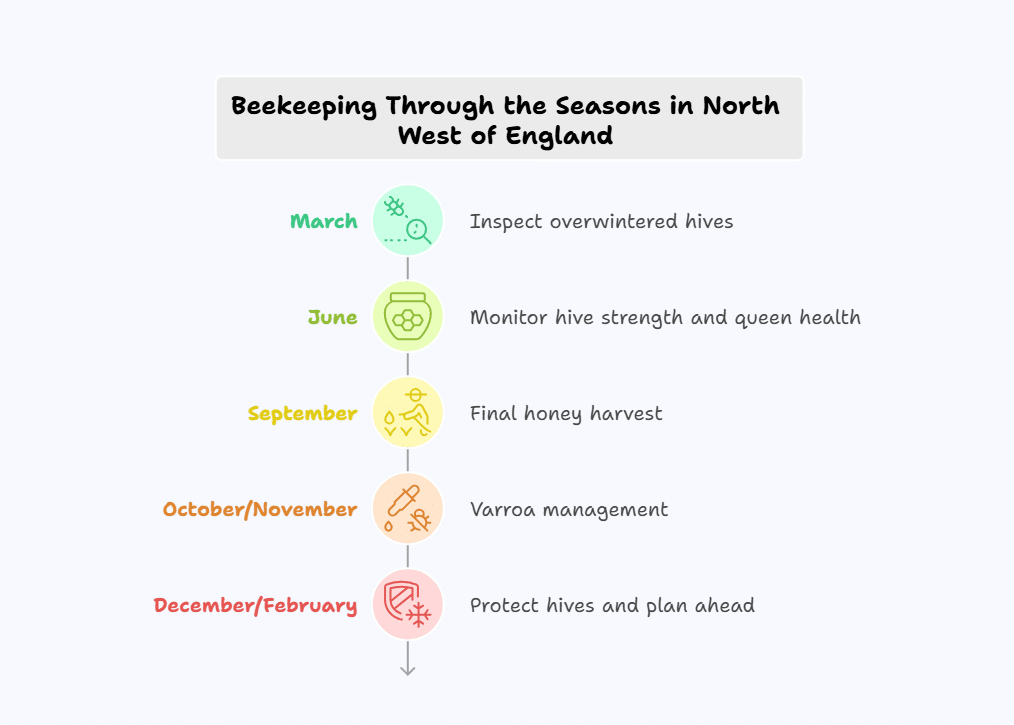
Spring (March – May): Building Momentum
Inspect Overwintered Hives
As temperatures rise in March, check hive survival and assess colony strength. Look for signs of brood, fresh eggs, and a consistent laying pattern. If the queen is failing or absent, consider combining the colony with a stronger one or replacing her early. This is also the ideal time to plan for buy nucs UK to expand or strengthen your apiary.
Clean Equipment and Replace Damaged Frames
Spring is also the time to clean any stored equipment and replace mouldy or damaged frames. Old comb can harbour disease, so rotating out the darkest frames helps reduce long-term risk. Clean boxes and tools thoroughly with a blowtorch or soda crystals, depending on the material.
Begin Feeding if Nectar Is Scarce
With forage still limited in early spring, especially after a wet winter, bees may need supplementary feeding. Use light sugar syrup (1:1 ratio) to support colony build-up, particularly if stores are low or temperatures remain unstable. Avoid feeding during cold snaps, as bees won’t be able to process the syrup effectively.
Check for Disease
Early detection of disease is critical. Check for signs of nosema (diarrhoea on the entrance or frames), and monitor Varroa mite levels using a sugar roll or alcohol wash. If Varroa levels are high, consider using approved spring treatments like MAQS (formic acid) that work in cooler conditions. Replace combs with chalkbrood or signs of mould.
Swarm Management Preparation
Spring is prime time for swarming. Ensure there’s enough space by adding supers before the brood box becomes congested. Consider performing a nucleus colony split if needed.
Planting Local Forage
Supporting bees with early forage improves their resilience. Encourage planting of crocus, dandelion, pussy willow and blackthorn in gardens or nearby green spaces. These plants provide nectar and pollen before traditional crops and wildflowers bloom.
Pro Tip:
Cold snaps are still common in March and April. Using insulation boards above the crown board helps hives retain heat, especially overnight. This promotes stable brood temperatures and aids colony expansion. Always ensure adequate ventilation to prevent condensation build-up inside the hive.
Weather during the early months of spring, however, can differ wildly from year to year. In 2025, March and April started an excellent early spring nectar flow, with some hives gathering 30lbs of nectar in one week.
Summer (June – August): Peak Hive Activity
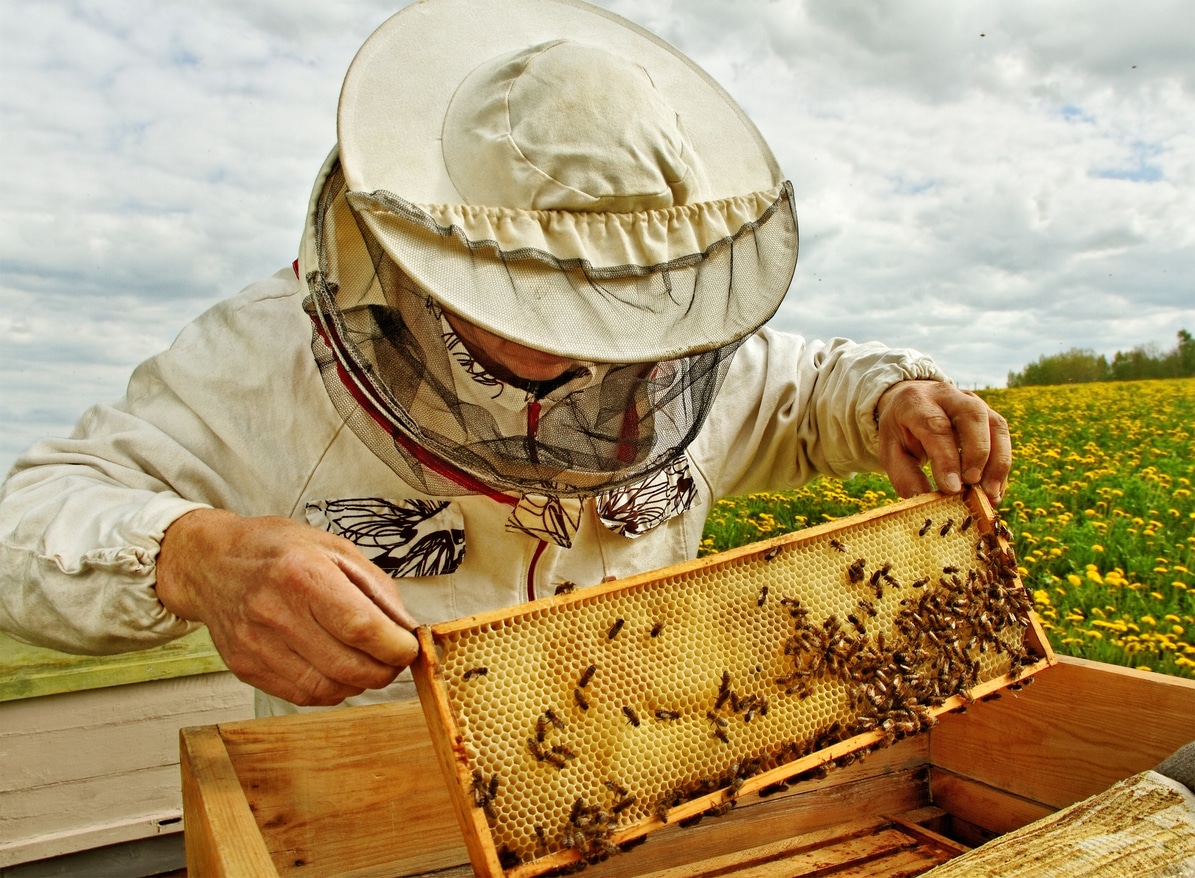
Monitor Hive Strength and Queen Health
During summer, colonies reach peak population. Regular inspections every 7–10 days help confirm a healthy queen, consistent brood pattern and steady honey flow. If the queen fails or is superseded, it’s crucial to act quickly to avoid brood gaps during the main flow. A declining brood pattern may also signal disease or overcrowding.
Continue Swarm Control
Swarm pressure often continues into June, particularly if spring weather was unsettled. Look for charged queen cells and act promptly by splitting hives, caging the queen, or performing a nucleus split. Keeping colonies busy with space to build and forage helps reduce swarming instinct.
Add Supers to Avoid Overcrowding
Add an extra box on top of the hive’s main brood chamber – known as supers – to give bees room to store nectar and reduce congestion in the brood chamber. Use a drawn comb if available, as bees are more likely to fill it quickly. Overcrowded hives can trigger swarming and hinder honey production.
Harvest Early Honey
Some floral sources such as clover, lime or oilseed rape (OSR) peak in early summer. If capped honey is present, remove supers promptly to avoid granulation, especially with OSR. Use a clearer board for gentle removal and extract honey soon after to preserve quality and flavour.
Pest Control: Monitor Varroa Mite Levels
Varroa control remains essential in summer. Conduct mite checks using an alcohol wash or powdered sugar roll. If counts exceed treatment thresholds (usually around 2–3 mites per 100 bees), consider applying treatment post-harvest. Mite infestations reduce bee lifespan and increase susceptibility to viruses.
Treat if Above Threshold
If mite levels are high, schedule appropriate treatment after removing honey supers. In summer, biotechnical methods such as drone brood removal or use of a brood break can also help reduce population growth.
Forage Management
Encourage pollinator-friendly planting in gardens, allotments or community spaces. Lavender, bramble, white clover and borage are all strong summer nectar sources. Diverse local forage supports both honey production and colony health.
Pro Tip:
During hot spells, bees need access to clean water for cooling the hive and feeding brood. Place shallow dishes or trays filled with pebbles and fresh water near hives. Change water regularly and position it in partial shade to prevent evaporation. This helps bees regulate hive temperature during peak heat.
Read More: How to Choose and Successfully Integrate a Nucleus Colony
Autumn (September – November): Preparing for Winter
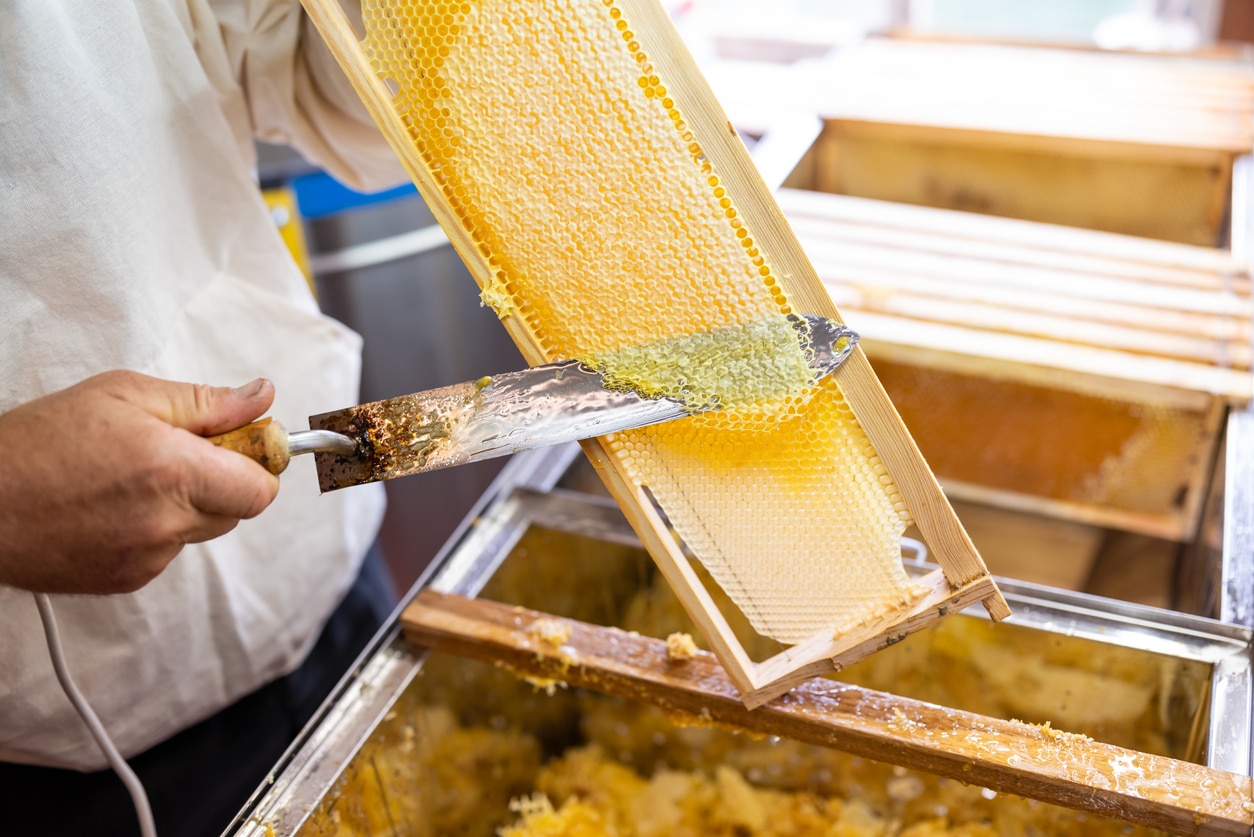
Final Honey Harvest
Early September is typically the last opportunity to remove surplus honey. Leave enough stores behind—around 18–20 kg of honey per colony—for overwintering. Harvest only capped frames to avoid moisture issues during storage. Extract and jar promptly to maintain honey quality.
Begin Feeding Syrup for Winter Stores
Once the final honey is removed, begin feeding thick sugar syrup (2:1 ratio) to top up stores. Feed in the evening to reduce robbing. It’s best to complete feeding before temperatures drop below 10°C, as bees will struggle to process the syrup into usable stores once it cools.
Check for Queenright Colonies
Ensure every colony has a healthy, laying queen heading into winter. Spotty or absent brood can indicate problems. If queenless, consider uniting the colony with a strong queenright hive using the newspaper method. Weak colonies with low bee numbers are unlikely to survive the winter on their own.
Combine Weak Hives if Necessary
Assess hive strength honestly. If a colony is underpopulated or slow to build stores, combining it with a stronger colony may improve survival chances. Do this early enough for the bees to settle before cold weather sets in.
Varroa Management
Autumn is the final window to treat for Varroa mites before winter. Apply oxalic acid via sublimation (vaporisation) once brood levels drop, usually in late October or November. Treating when little or no brood is present ensures maximum mite kill. Always follow approved product guidance.
Equipment Maintenance
Remove old or damaged frames, especially those with darkened wax or signs of mould. These can harbour disease and reduce efficiency. Clean supers and other spare equipment before storage. Use acetic acid or freeze frames to prevent wax moth infestations.
Pro Tip:
Adding dummy boards or insulation within the hive can help regulate internal temperature. Reducing internal space also helps smaller colonies maintain warmth. Ensure ventilation is still adequate to prevent condensation, which is a bigger threat than cold.
Winter (December – February): Protection and Planning
Leave Hives Undisturbed
In winter, the goal is to keep disturbance to a minimum. Avoid opening the hive unless absolutely necessary. Lifting the crown board during cold weather can chill the cluster and cause brood loss. Only intervene if signs suggest critical shortages.
Hefting Hives to Assess Stores
Use the hefting method to gauge hive weight. Light hives may be low on stores. Perform gentle lifts from one side, noting the relative weight compared to other colonies. This gives a non-invasive way to monitor food levels without opening the hive.
Add Fondant if Stores Are Low
If a hive feels light, place fondant directly above the cluster on the crown board. This cold-weather feed source is easier for bees to access than syrup. Re-check in January and February, especially during milder spells when bees become more active.
Protect from Wind, Damp and Pests
Position hives away from prevailing wind and raise them off damp ground to prevent mould. Add mouse guards to entrances and secure roofs against wind. In rural areas, use mesh or physical barriers to deter woodpeckers from pecking at wooden hives.
Planning Ahead
Winter is a good time to assess gear, order new equipment and plan next season’s strategy. Consider breeding queens, making increases, or improving hive records. Use the downtime to attend local association meetings or online training sessions to sharpen skills.
Pro Tip:
In colder or exposed locations, consider wrapping hives with breathable insulation to conserve warmth. Products like foam wraps or quilted hive cosies can help maintain temperature, but ensure airflow is maintained to prevent damp buildup.
Region-Specific Considerations for the North West of England
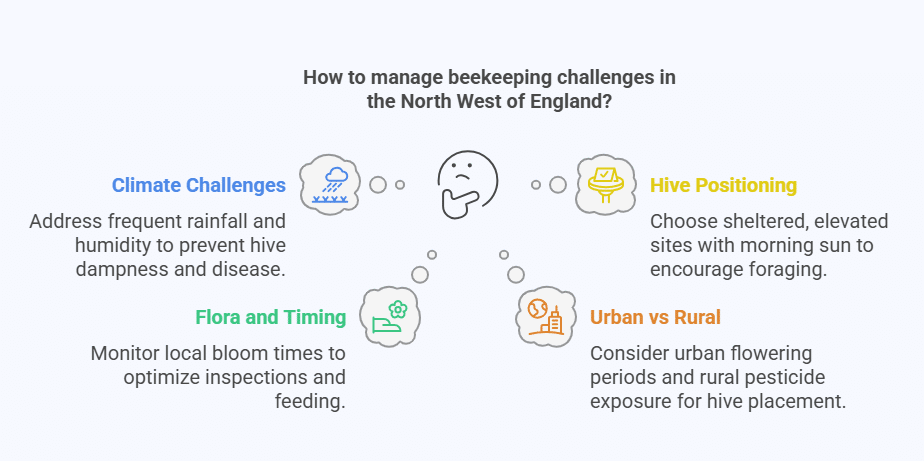
Challenges of the Local Climate
Beekeepers in the North West face unique challenges due to frequent rainfall, high humidity and strong winds, particularly along coastal and upland areas. These conditions increase the risk of damp inside hives, which can weaken colonies and promote disease.
Hive Positioning for Protection
Choose hive sites that are sheltered from prevailing winds and elevated to prevent waterlogging. South-facing positions with good morning sun are ideal to encourage early foraging. Use hive stands to raise boxes off damp ground and improve air circulation beneath.
Local Flora and Timing
The North West has a slightly delayed seasonal cycle compared with southern England. Flowering of key forage plants such as hawthorn, clover and lime often occurs a week or two later. Monitoring local bloom times helps time inspections, feeding and supering more accurately.
Urban vs Rural Settings
Urban areas may offer longer flowering periods due to ornamental planting, while rural locations may rely more heavily on agricultural crops. Be aware of potential pesticide exposure near farmland and adjust placement or forage supplementation accordingly.
Common Mistakes to Avoid Through the Seasons
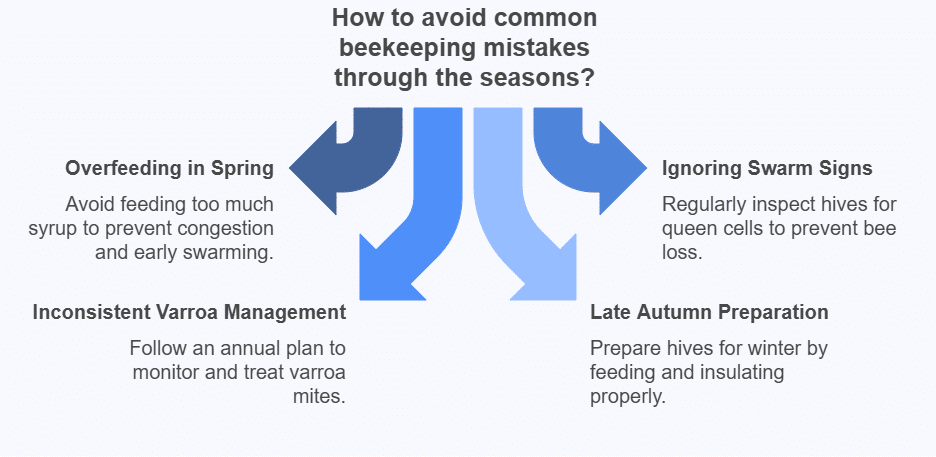
Overfeeding in Spring
Feeding too much syrup in spring can reduce laying space, causing congestion and triggering early swarming. Feed only when necessary based on hive stores and weather.
Ignoring Swarm Signs
Missing signs of swarming—such as queen cells or reduced space—can result in lost bees and reduced honey yield. Regular inspections during spring and early summer are essential.
Inconsistent Varroa Management
Failing to monitor and treat for Varroa at key times—especially post-harvest and late autumn—can lead to weakened bees and winter losses. Stick to an annual plan with clear treatment thresholds.
Late Autumn Preparation
Delaying feeding, combining weak colonies too late, or neglecting insulation can put hives at risk before winter sets in.
Example: Opening Hives Unnecessarily in Winter
Lifting crown boards during cold spells disturbs the cluster and risks chilling brood. Use hefting and visual checks instead to assess hive condition.
Read More: Best Practices for Placing and Setting Up Your New Beehive
Resources for Local Beekeepers
Regional Associations
Beekeepers in the North West have access to several active local groups, including the Lancashire & North West Beekeepers Association, Cheshire Beekeepers’ Association, and Southport & District Beekeepers. These organisations offer support, mentoring and local insights tailored to the region’s conditions.
Online Platforms and Support
The British Beekeepers Association (BBKA) website and BeeBase (run by the National Bee Unit) provide up-to-date disease alerts, practical advice and hive registration tools. These platforms also share regional news, research updates and free resources.
Training and Events
Many associations host seasonal workshops, beginner courses, and hands-on apiary days. Attending these events builds skills and connects you with experienced beekeepers familiar with the North West’s challenges.
Local Expertise: Dee Valley Bees
Dee Valley Bees offers region-specific knowledge, products, and support for new and experienced beekeepers. Their practical guidance and equipment tailored to the local climate make them a trusted resource for year-round beekeeping success.
Conclusion
Seasonal awareness is essential for successful beekeeping in the North West of England. The region’s damp, variable climate requires thoughtful timing, careful inspection and proactive planning to maintain strong, healthy colonies throughout the year.
Adaptation to seasonal changes, combined with consistent pest management and hive support, reduces stress on bees and improves outcomes. No two years are the same, so staying alert to weather trends and floral cycles is key.
Continue learning through local networks, hands-on practice and observation. By staying in tune with your bees and their environment, you can work with the seasons—not against them.